A smart light bulb can be switched on and off remotely. This first feature, which turns smartphones into luxury remote controls, is however accompanied by many other options, depending on the model. Smart light bulbs can be used in a home automation system, provided they are compatible with other equipment.
Operation of a smart light bulb
To the naked eye, nothing distinguishes a smart light bulb from a conventional bulb... At least at the end. The illuminating part remains the same from one bulb to another, but the base of the bulb, which extends the socket, is longer and encases the fragile luminous glass in a metal or plastic shell. The connection is made at this base, which contains electronic components to allow communication between the bulb and your other devices. These shells are part of the bulbs and cannot be separated from them (it is therefore impossible to try to connect a conventional bulb).
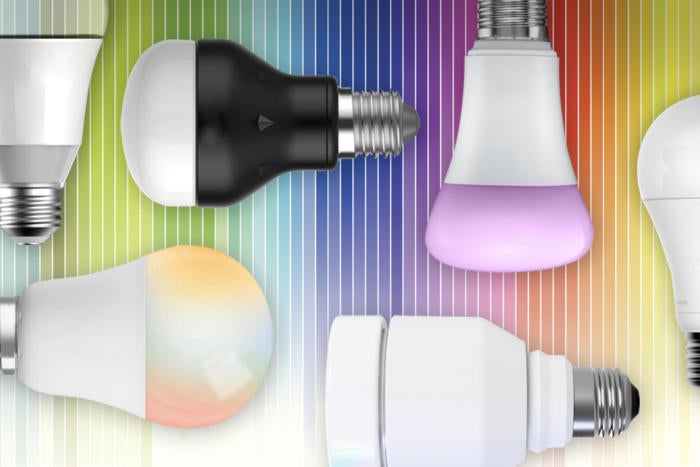
A smart light bulb can be controlled from a smartphone or tablet. An application must be downloaded to enjoy all the functions of the bulb.
Most of them communicate via Bluetooth, which means that you should not be too far away from the light bulb (about 15 meters maximum) to be able to control it.
Others, rarer, connect via Wi-Fi, or even via a Hub (an accessory used as a communication bridge) that will have to be installed in addition. These two options make it possible to switch the bulbs on or off from a longer distance (from the workplace, for example).
The different functions of a connected light bulb
While remote ignition remains the first function that comes to mind when talking about smart light bulbs, other options complete the offer.
Ambience management
The smart bulb allows a precise management of the lighting ambience. Switching from working light to a subdued atmosphere throughout the house with a simple click is sometimes very pleasant! It is also possible to change the emitted colour according to the preset scenario.
Timer programming
The light adapts to the time of day and to the instructions you have given. For example, the light bulb gives off a soft light when you wake up, which gradually increases in intensity in the rooms. You can also simulate a presence when you are not at home.
Always with the idea of strengthening and expanding your home automation system, the smart bulb can synchronise with other connected devices in your home.
Notification
The light bulb can emit a light signal to let you know, for example, that a message has been received. This option is extremely practical for people with hearing loss (but not only), as it also alerts you in case of fire.
Bonus options
Some light bulbs are also capable of diffusing perfume, essential oils or music, while others are equipped with smoke detectors, cameras or act as Wi-Fi amplifiers.
Tips before buying a smart bulb
Smart bulbs are supposed to have a relatively long life, so you might as well choose the right model! Before any purchase, check the compatibility of the dedicated application with your model of smartphone or tablet, but also the type of connection: if you mainly need to be able to control the bulb from a long distance, you won't opt for a Bluetooth model. The bulb mounting system must be compatible with your electrical installation.
As far as the quality of the light emitted is concerned, you will not always need the same power depending on the rooms. The intensity of most smart bulbs is variable. However, we speak of lux for the overall luminosity provided (bearing in mind that you need at least 500 lux to be able to read comfortably). The higher this value, the more powerful the lighting provided.
Ask about the color temperature, in Kelvin (K): the higher the value, the colder and bluer the light will be. The lower values correspond to a warm, yellow-orange light. For consumption, expressed in watts, the lower the value, the more economical the bulb will be.
Another important point is the angle of diffusion: the smaller the angle, the more concentrated the light beam will be (to highlight a painting, for example). For more general lighting, an angle close to 180° or more is recommended.
Finally, check the possibility of linking it with your existing home automation network and the number of bulbs that can be connected to the same system. This is an important element to take into account for large houses.
Purchase and price of a smart light bulb
Smart bulbs can be found in most household appliance stores, especially now that the main brands in this sector are offering their models. For more specific products, with more particular functions, it will sometimes be necessary to turn to the Internet: not all brands have the same distribution channels.
The most economical smart bulbs are sold for less than 30 dollars. Others are offered at 100 or even 200 dollars for the most expensive ones. When you buy a light bulb, check whether you also need to buy a hub to communicate with your smartphone: it can increase the bill and is not always included in the price of the bulb.
